SSL and TLS – In today’s digital world, online security is more important than ever. Whether you’re shopping online, managing sensitive data, or simply browsing your favorite websites, you rely on secure connections to protect your information. Two critical technologies behind these secure connections are SSL (Secure Sockets Layer) and TLS (Transport Layer Security). While they are often mentioned together, SSL and TLS are not the same. Let’s dive into their differences and why TLS has become the modern standard SSL and TLS.
Table of Contents
What Is SSL?
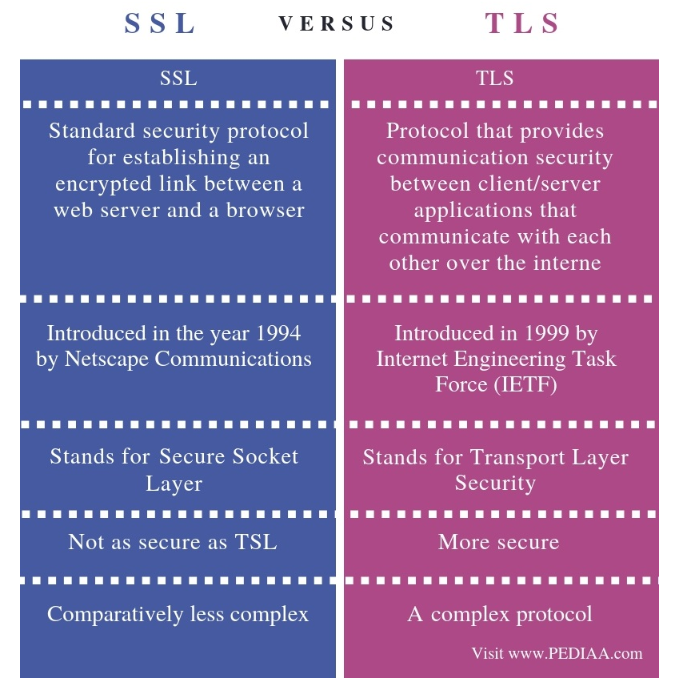
SSL was introduced in the mid-1990s as a protocol designed to secure communication between web servers and browsers. It achieved this by encrypting data, ensuring that sensitive information like credit card numbers, passwords, and personal details could not be intercepted by malicious actors.
The most widely adopted version of SSL was SSL 3.0, released in 1996. However, as security threats evolved, SSL 3.0 became vulnerable to attacks, such as the POODLE (Padding Oracle On Downgraded Legacy Encryption) exploit. This led to the development of TLS as its successor.
What Is TLS?
TLS is the next-generation version of SSL, first introduced in 1999. It was built on SSL’s foundation but with enhanced security features and improved performance. Today, TLS has replaced SSL entirely, with versions TLS 1.2 and TLS 1.3 being the current standards.
TLS provides robust encryption, authentication, and integrity checks, making it a cornerstone of modern internet security. Despite its widespread use, many people still refer to TLS as “SSL” out of habit or convenience.
Key Differences Between SSL and TLS
While SSL and TLS share similar goals, they differ in several critical ways:
1. Encryption Strength
TLS uses stronger encryption algorithms and supports more advanced cryptographic protocols compared to SSL. For example, TLS 1.3 eliminates older, less secure algorithms to mitigate vulnerabilities.
2. Handshake Process
The handshake process—the initial exchange of information to establish a secure connection—is more efficient in TLS. It uses fewer round trips, which reduces latency and speeds up connections.
3. Message Authentication
TLS employs more secure hash functions, such as HMAC (Hash-Based Message Authentication Code), for verifying data integrity. SSL relies on weaker hash algorithms, which are more susceptible to attacks.
4. Flexibility and Extensibility
TLS is designed to be more flexible, allowing it to adapt to new cryptographic standards and evolving security needs. SSL lacks this adaptability and is now considered obsolete.
SSL Vs TLS
Why TLS Is the Modern Standard
SSL is no longer in use, and modern web servers, browsers, and applications exclusively support TLS. The transition to TLS ensures:
- Improved Security: TLS addresses vulnerabilities found in SSL, providing a safer environment for data transmission.
- Better Performance: TLS is optimized for faster connections and lower latency.
- Regulatory Compliance: Many regulations, such as PCI DSS, require the use of secure protocols like TLS for protecting sensitive data.
How to Ensure You’re Using TLS
To confirm that your website or application uses TLS, follow these steps:
- Check Your Certificate: Modern SSL/TLS certificates support only TLS. Ensure that your certificate is valid and up to date.
- Inspect Your Server Configuration: Use tools like SSL Labs to test your server’s protocol support. Ensure SSL 3.0 and older versions are disabled.
- Update Software: Ensure your web server, browser, and other software are updated to support the latest version of TLS.
Conclusion
While the terms SSL and TLS are often used interchangeably, it’s essential to understand the differences. SSL is an outdated protocol that paved the way for TLS, the modern standard for securing internet communications. By embracing TLS and staying informed about its updates, you can ensure that your online interactions remain private and secure.